Tallow Deodorant vs. Natural Deodorant: What's Actually Different?
The short answer: The main difference is the base formula. Most natural deodorants use coconut oil, shea butter, or plant-oil blends as their carrier. Tallow deodorant uses grass-fed beef tallow — a fat whose fatty acid profile closely mirrors your skin's own sebum. That difference in the base affects how the formula absorbs, how it feels, and how well it works for reactive or sensitive skin.
Walk into any natural grocery store and you will find shelves of deodorants all making roughly the same claims: aluminum-free, fragrance-free (or naturally scented), baking soda-based odor control. Most of them are genuinely good products. But they are also mostly the same product — coconut oil or shea butter base, baking soda as the odor-fighter, essential oils for scent.
Tallow deodorant is a genuinely different formula. The base is not a plant oil — it is rendered grass-fed beef fat. And that difference has real consequences for how the deodorant interacts with your skin. This article breaks down what those consequences are, and whether they matter for you.
What Natural Deodorant Actually Is
Natural deodorant is a category, not a formula. What the term really means in practice is: no aluminum (the active ingredient in antiperspirants), no synthetic fragrance, and no parabens. Everything else is up to the brand.
Most formulas follow a similar structure:
The Base
Usually coconut oil, shea butter, cocoa butter, or a combination. The carrier that holds everything together and provides the texture.
The Odor Fighter
Typically baking soda (sodium bicarbonate), magnesium hydroxide, or non-nano zinc oxide. These target the bacteria responsible for odor, not sweat itself.
The Scent
Essential oils or fragrance-free. Most brands offer both options. Fragrance-free is generally better for sensitive skin.
The Format
Cream (applied with fingers), solid stick, or spray. The format affects how much product reaches your skin and how quickly it absorbs.
Natural deodorant does not stop sweat — only aluminum-based antiperspirants do that by physically blocking sweat glands. What it does is create an environment where odor-causing bacteria cannot thrive. Whether it works depends heavily on the combination of base and odor-fighter, and how your individual body chemistry interacts with both.
What Tallow Deodorant Is
Tallow deodorant uses the same odor-control logic — baking soda, zinc oxide, magnesium hydroxide — but replaces the plant-oil base with rendered grass-fed beef tallow. The same formula structure, different carrier fat.
That swap matters because of what tallow is made of. Grass-fed beef tallow has a fatty acid profile that is unusually close to human sebum — the oil your skin naturally produces. Human sebum is roughly 57% oleic acid, 26% palmitic acid, and 3% stearic acid. Grass-fed tallow is approximately 47% oleic, 26% palmitic, and 14% stearic. No plant oil matches this ratio as closely.
Why the fat profile matters: When a formula's base fat is similar to your skin's own oils, it absorbs more readily and sits less on the surface. This is why tallow-based products rarely feel greasy even though they are fat-based — the skin recognizes and draws in what it already knows. Learn more about how tallow deodorant works →
Tallow also provides fat-soluble vitamins A, D, E, and K in a bioavailable form — all of which play a role in skin barrier function and repair. That is not something coconut oil or shea butter brings to the formula. It does not make tallow deodorant a skincare product, but it does mean the base is doing more active work than a neutral carrier fat would.
Head-to-Head: Where the Differences Show Up
Skin Compatibility
This is where the difference between tallow and plant-oil bases is most noticeable. Coconut oil is comedogenic for some people — it can clog pores, particularly in areas prone to ingrown hairs. Shea butter sits better but can still feel heavy. Tallow absorbs in a way that feels lighter than its fat content would suggest, because the fatty acids are similar enough to sebum that the skin pulls them in rather than having to sit on top of them.
For sensitive or reactive skin — the kind that gets baking soda rash from standard natural deodorants — tallow's biocompatibility can make a meaningful difference. The same odor-fighting ingredients feel different when they are delivered in a base that the skin responds to more naturally. See our full guide on best deodorant for sensitive skin for more detail.
Odor Control
Tallow deodorant and standard natural deodorant both work. The odor-control ingredients — baking soda, zinc, magnesium — do the actual odor fighting regardless of what base they come in. Where people notice differences is in how long protection lasts and how skin feels throughout the day.
Some people report longer-lasting protection with tallow-based formulas. The most likely explanation is absorption: if the formula absorbs more completely into the skin rather than sitting on top, the active ingredients stay in contact with skin longer rather than being wiped away. This is not universal — individual body chemistry and sweat production vary considerably — but it is a commonly reported experience.
Adjustment Period
Both tallow and standard natural deodorants require an adjustment period if you are switching from an antiperspirant. Your sweat glands reopen after years of being blocked by aluminum, and the first two to four weeks can involve more sweat than you are used to. This is true regardless of which natural formula you choose — it is your body adjusting, not the deodorant failing.
If you are switching from one natural deodorant to another (not from antiperspirant), adjustment is usually minimal. You may notice your skin responding differently to the new base, but there is no sweat-gland recalibration happening.
Ingredient Sourcing
Standard natural deodorants are typically vegan. Tallow deodorant is not — it is an animal-derived product. For people who specifically avoid animal ingredients, this is the deciding factor. For people who focus on ingredient quality and skin compatibility rather than veganism, tallow from grass-fed, pasture-raised sources is about as clean as a fat-based ingredient gets.
Key takeaway: Tallow deodorant is not better or worse than all natural deodorant — it is a different approach to the same goal. The base is more skin-compatible for many people, particularly those with sensitive skin or reactions to typical plant-oil bases. The odor-control ingredients are comparable. The sourcing is animal-derived, which matters to some buyers and not to others.
Stank Stop: FATCO's Tallow Deodorant
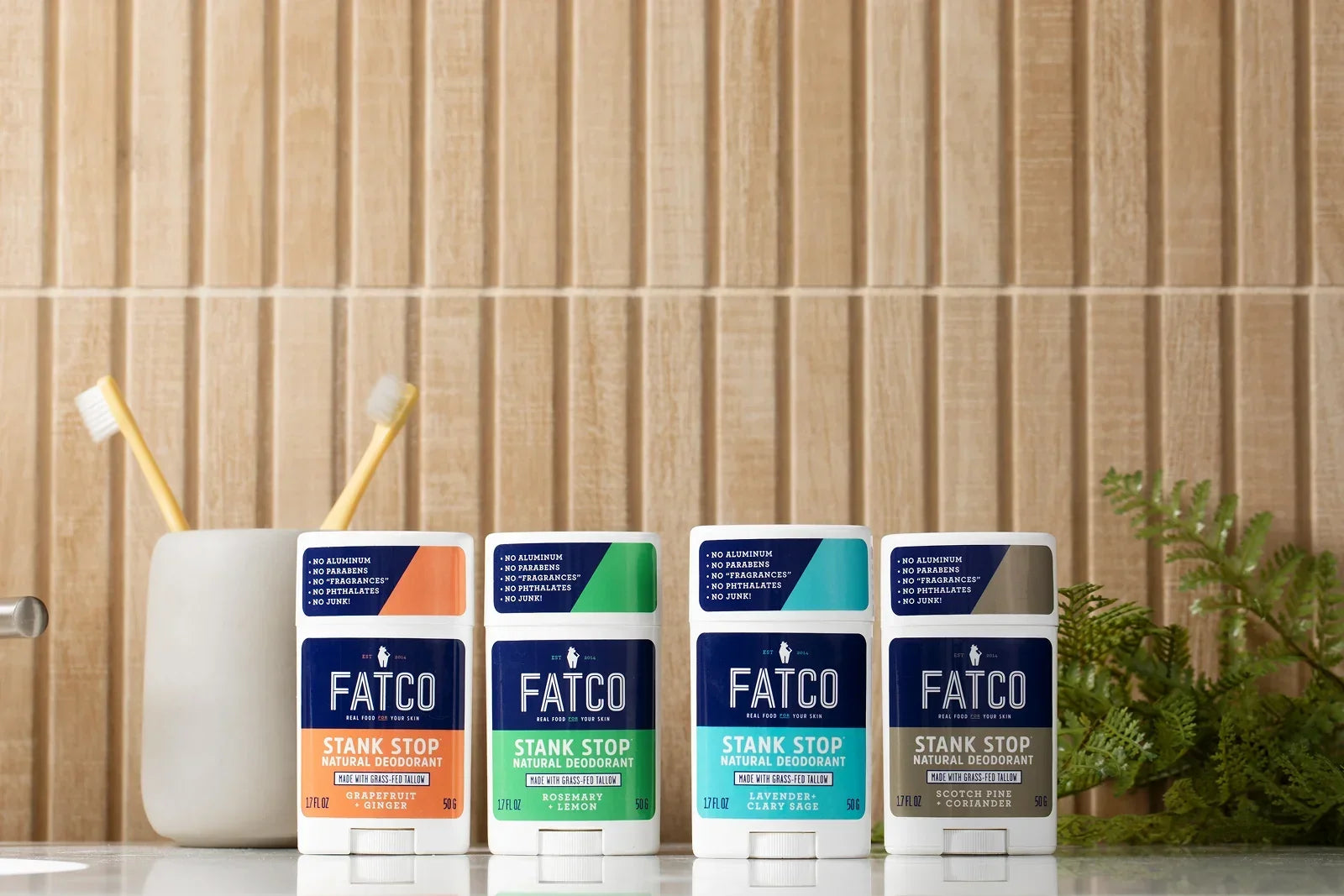
Stank Stop is FATCO's aluminum-free, grass-fed tallow-based deodorant. The formula uses grass-fed tallow and organic coconut oil as its base, with baking soda, non-nano zinc oxide, and magnesium hydroxide for odor control. Available in cream (applied with fingers) and stick formats, with scented and unscented options.
If you are new to tallow deodorant, the unscented cream is the best starting point. It gives you the clearest read on how your skin responds to the formula, without a scent variable that could cause its own reaction.

Best Starting Point
Stank Stop Cream Deodorant, Unscented, 1 Oz
$12.00 — Grass-fed tallow base, no fragrance, no aluminum, no synthetic ingredients. The cleanest entry point into tallow deodorant.
Shop Now

Not sure which format is right for you? The best tallow deodorant guide walks through the full Stank Stop line and when to choose cream vs. stick.
Frequently Asked Questions
Q Is tallow deodorant better than natural deodorant?
Tallow deodorant performs similarly to other natural deodorants for odor control, but differs in its base formula. Grass-fed tallow has a fatty acid profile that closely mirrors human sebum, which makes it more skin-compatible than plant oil bases for many people — particularly those with sensitive skin or reactions to baking soda-heavy formulas. Whether it is "better" depends on what your skin needs.
Q What is the difference between tallow deodorant and regular natural deodorant?
The main difference is the base. Most natural deodorants use coconut oil, shea butter, or a blend of plant-based oils as their carrier. Tallow deodorant uses rendered beef fat — specifically grass-fed tallow — instead. Tallow's fatty acid composition closely mirrors the skin's own sebum, which means it absorbs more readily and works better with the skin barrier than many plant-oil alternatives.
Q Does tallow deodorant actually work?
Yes. Tallow deodorant controls body odor the same way other natural deodorants do — through odor-neutralizing ingredients like baking soda, zinc oxide, and magnesium hydroxide that address the bacteria responsible for odor. It does not block sweat, but it manages smell effectively for most people. Read the full breakdown in does tallow deodorant work.
Q Is tallow deodorant safe for sensitive skin?
Tallow deodorant tends to be well-tolerated by sensitive skin because grass-fed tallow is biocompatible with human skin. The unscented formula is the best starting point for reactive skin. As with any deodorant, patch testing before full use is recommended. See the full guide on deodorant for sensitive skin.
Q Do you need an adjustment period when switching to tallow deodorant?
Yes, if you are switching from an antiperspirant. Your body needs two to four weeks to adjust as sweat glands reopen after being blocked by aluminum. During this time you may notice more sweat than usual — this is normal and temporary. If you are switching from another natural deodorant, adjustment is usually minimal.