Best Deodorant for Sensitive Skin: What to Look For (and What to Avoid)
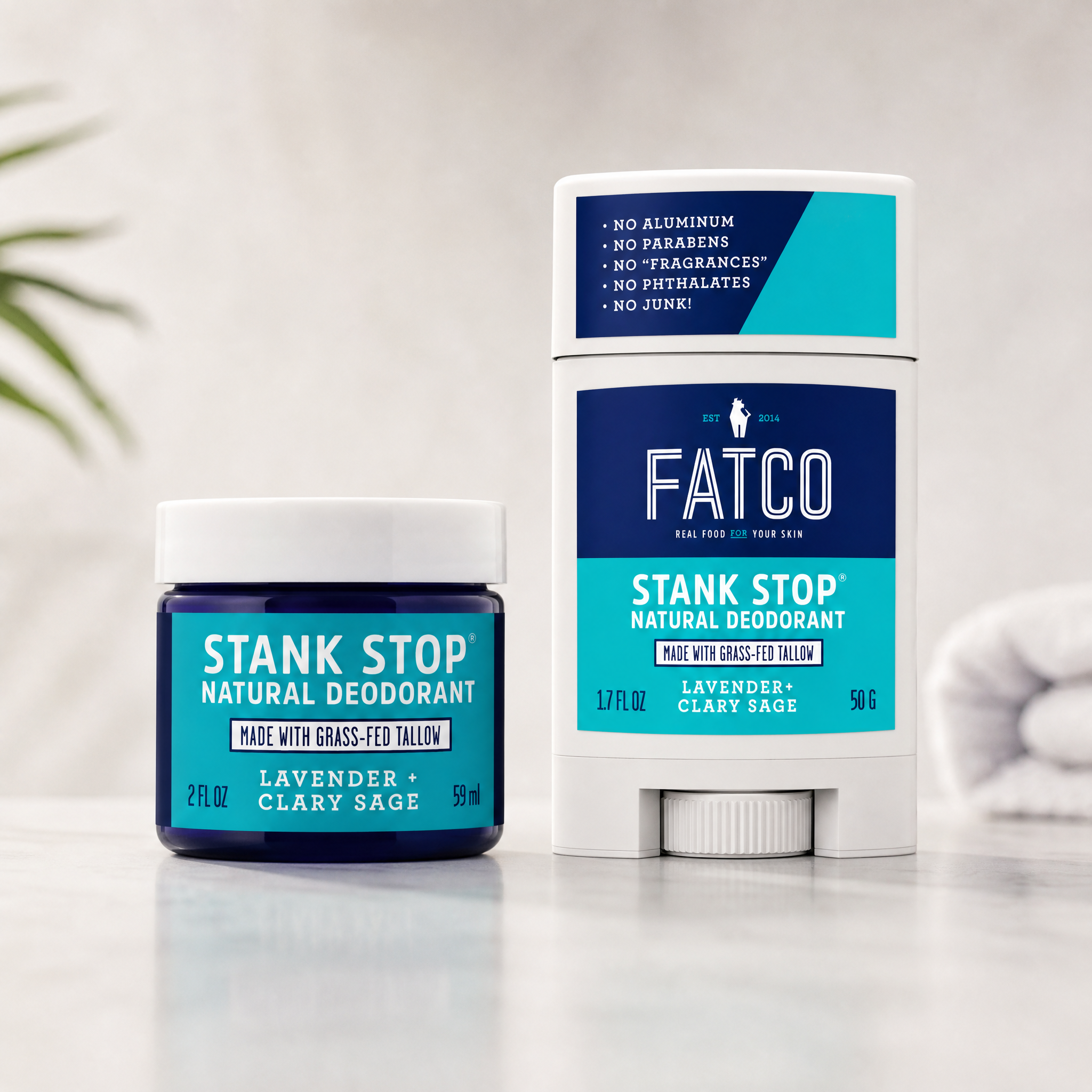
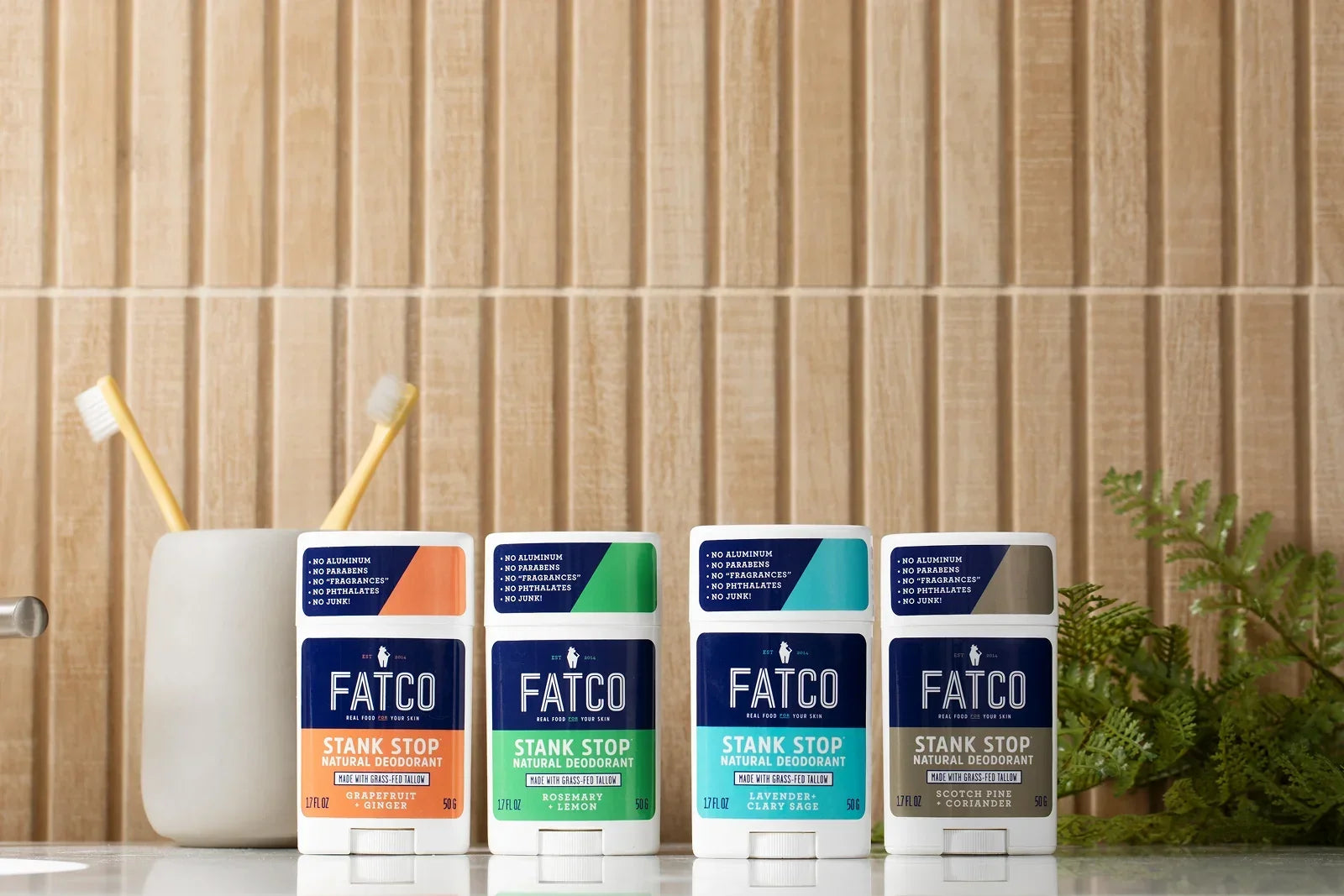
The short answer: Tallow deodorant is one of the best options for sensitive underarm skin because the tallow base closely mirrors your skin's natural sebum — meaning it conditions rather than disrupts. FATCO's Stank Stop Unscented is the most direct recommendation: no fragrance, no aluminum, baking soda and non-nano zinc oxide for odor control, and a grass-fed tallow base that supports rather than irritates the skin barrier.
If you've tried natural deodorant and ended up with a rash — or worse, a burn — you're not alone. Baking soda is the usual culprit. In high concentrations without a buffering agent, it disrupts the skin's acid mantle and causes redness, irritation, and in some cases a visible chemical-like burn. The same ingredient that makes natural deodorant work can make it brutal for sensitive skin.
Tallow changes this equation. Here's how.
Why Sensitive Skin Reacts to Most Natural Deodorants
The underarm area is one of the most reactive zones on the body. It's frequently shaved, it folds against clothing, it's warm and humid, and it takes daily product application. For people with sensitive skin, this combination of friction, moisture, and formula contact is a recipe for chronic low-grade irritation — or acute flare-ups when the formula is too harsh.
The two most common culprits in natural deodorants:
High-Concentration Baking Soda
Baking soda is alkaline — it raises the pH of the underarm environment to inhibit odor-causing bacteria, which is how it works. But the underarm skin's acid mantle sits at a pH of around 4.5–5.5. Prolonged exposure to a highly alkaline substance disrupts this barrier, causing redness, burning, and sometimes a visible rash. The longer the formula stays on skin without a buffering agent, the worse this gets.
Coconut Oil Base
Coconut oil is predominantly lauric acid — a fatty acid that's structurally quite different from human sebum. For most skin types this is fine. For sensitive or reactive skin, it can feel occlusive or cause contact reactions. It's not universally irritating, but it's not as skin-compatible as a sebum-mimicking fat.
Key takeaway: Most natural deodorant reactions aren't random sensitivity — they're a predictable response to high-pH baking soda on an unbuffered base. The fix isn't to eliminate baking soda; it's to buffer it correctly and carry it in a skin-compatible base.
Why Tallow Works Better for Sensitive Underarm Skin
Tallow is rendered animal fat — in FATCO's case, from grass-fed beef. Its fatty acid profile is dominated by oleic, palmitic, and stearic acids: the same fatty acids that make up human sebum, the oil your skin naturally produces.
When you apply a fat with a similar lipid profile to your own skin oil, the skin barrier accepts and absorbs it differently than it would a structurally foreign fat. Tallow doesn't sit on the surface competing with the skin's natural moisturization — it integrates. The practical result for sensitive skin is that the underarm area is less reactive to daily product contact, not more.
The second advantage is zinc oxide. Stank Stop uses non-nano zinc oxide as a second odor-control ingredient alongside baking soda. Zinc oxide does two things: it adds an antibacterial and antifungal layer that baking soda doesn't provide, and it buffers the pH disruption that baking soda causes on its own. Less baking soda stress on the skin barrier, more odor control coverage — for sensitive skin, this is the right trade.
Additional Tips for Sensitive Skin
The formula matters most, but how you apply it matters too. A few things that make a difference for sensitive underarm skin:
Apply to Dry Skin Only
Never apply right after shaving or showering when skin is still slightly damp. Damp skin absorbs product more readily, including any potential irritants. Dry skin gives you a more controlled application.
Use Less Than You Think
A pea-sized amount per underarm is typically sufficient with tallow cream. More product means more baking soda contact. Start minimal — you can always add a touch-up — but reducing overuse prevents the most common irritation pattern.
Start Unscented
When testing a new formula, eliminate variables. Start with Unscented so you know whether any reaction is from the base formula or from the essential oils. Once you confirm the formula works for your skin, you can try a scented version if you'd like.
Wait Between Shaving and Applying
Freshly shaved skin is more porous and reactive. Give it at least 15–30 minutes before applying deodorant, even a gentle one. This single habit prevents a significant portion of the "my natural deodorant irritates me" reactions.
Recommended: FATCO Stank Stop Unscented
For sensitive skin specifically, start with the Unscented 1 oz cream. The 1 oz size is the lowest-commitment way to test the formula — enough product for 1–2 months — and the cream format lets you apply a precise amount. Both the cream and stick are available in Unscented; the cream gives you more control over how much you use, which matters more for sensitive skin.

Best for Sensitive Skin
Stank Stop Cream Deodorant, Unscented, 1 Oz
$12.00 — No fragrance, no aluminum. The gentlest way to start.
Shop Now

See the full Stank Stop lineup at fatco.pro/collections/deodorant. For a full breakdown of how the formula works and what to expect from the switch, visit our tallow deodorant guide.
Got Questions?
Frequently Asked Questions
Q Why did other natural deodorants irritate my skin?
Most likely baking soda — specifically, baking soda in a coconut-oil base without zinc oxide to buffer the pH disruption. Baking soda works by raising underarm pH, but it also disrupts the skin's acid mantle. Without a buffering agent and a skin-compatible base, this causes redness and rash in sensitive individuals. Tallow changes the base; zinc oxide buffers the baking soda.
Q Is tallow deodorant safe for sensitive skin?
Yes, and particularly so compared to most natural deodorant alternatives. Tallow's fatty acid profile closely mirrors human sebum, which makes it one of the most skin-compatible base fats available. The zinc oxide in Stank Stop further reduces irritation potential by buffering baking soda's pH effect on the skin barrier.
Q What's the best natural deodorant for sensitive skin?
For sensitive underarm skin, look for a formula with non-nano zinc oxide (buffers the baking soda), a tallow or other sebum-compatible base (reduces skin barrier disruption), and an unscented option (eliminates essential oils as a variable). FATCO's Stank Stop Unscented 1 oz checks all three.
Q Can I use tallow deodorant right after shaving?
Wait at least 15–30 minutes. Freshly shaved skin has micro-abrasions and is more porous and reactive. Applying any deodorant — even a gentle one — immediately after shaving increases irritation risk. This single habit change prevents a significant portion of natural deodorant reactions in sensitive-skin users.
Q Will I still notice an adjustment period with tallow deodorant if I have sensitive skin?
Possibly, but the tallow base makes the transition gentler than most formulas. If you're switching from aluminum antiperspirant, the gland recalibration period (1–4 weeks of elevated sweating) still applies regardless of formula. The difference is that a tallow base is less likely to irritate sensitive skin during that window compared to a coconut-oil base formula.