Does Tallow Deodorant Work? The Science Behind the Formula
The short answer: Yes — tallow deodorant works. The odor control comes from baking soda and non-nano zinc oxide, not the tallow itself. The tallow is the base, and it's what makes this formula gentler than most natural alternatives: its fatty acid profile closely mirrors your skin's own sebum, so it conditions while it protects instead of disrupting the skin barrier over time.
If you've stumbled across beef tallow deodorant and your first reaction was skepticism, that's fair. The idea of using rendered animal fat on your armpits is an unusual proposition. But the question worth asking isn't "why would anyone do that?" — it's "does it actually work?" The answer, backed by the formula's ingredients and the experience of people who've switched, is yes. Here's the full picture.
What's Actually in Tallow Deodorant
FATCO's Stank Stop isn't just tallow in a jar. The formula has three jobs to do: stop odor, condition the skin, and stay gentle enough for daily use. It handles all three through a combination of ingredients that each do specific work.
Baking Soda
Raises underarm pH to create an environment where odor-causing bacteria can't thrive. Highly effective — and a staple of natural deodorant formulas for decades. The challenge is that in high concentrations without a buffering base, it can disrupt the skin's acid mantle and cause redness or rash.
Non-Nano Zinc Oxide
Adds a second layer of antibacterial and antifungal activity. The non-nano specification means the particles don't penetrate the skin barrier, which makes this gentler than nano zinc. Critically, zinc oxide buffers the pH disruption baking soda can cause — so the formula is more effective and kinder to skin simultaneously.
Grass-Fed Beef Tallow
The base ingredient. Contains conjugated linoleic acid (CLA) and other antimicrobial fatty acids, but its main function is as the carrier. Because tallow's fatty acid profile closely mirrors human sebum, it absorbs readily, conditions the underarm skin, and doesn't clog pores.
Key takeaway: The odor control in Stank Stop comes from baking soda and zinc oxide working together — a more complete approach than formulas that rely on baking soda alone. Tallow is the base that makes the formula skin-compatible, not the odor-fighter itself.
The Science: Why Tallow's Base Matters
Most natural deodorants are built on coconut oil, shea butter, or water-based gels. These work as carriers, but tallow has a structural advantage: its fatty acid profile — predominantly oleic, palmitic, and stearic acids — is strikingly similar to human sebum, the oil your skin naturally produces.
When you apply a substance with a similar lipid profile to your skin's own oil, the skin barrier absorbs and accepts it more readily. Coconut oil, by comparison, is predominantly lauric acid — effective but structurally different from sebum. Tallow doesn't sit on the surface the same way. It integrates.
Grass-fed tallow also contains fat-soluble vitamins A, D, E, and K, which support skin barrier function and cellular repair. The underarm area takes daily stress — shaving, friction, repeated product application. A base that actively supports skin repair is a meaningful difference over time, not just on the first application.
What Tallow Deodorant Does (and Doesn't Do)
Tallow deodorant controls odor. It does not stop sweating — and that's by design, not a limitation.
Sweating is a normal physiological process your body uses for temperature regulation and the excretion of certain metabolic byproducts. Conventional antiperspirants block sweat glands with aluminum salts, physically preventing sweating. Tallow deodorant doesn't interfere with sweating at all — it addresses the bacteria that turn sweat into odor once it reaches the skin's surface.
This distinction matters for how you evaluate whether it's working. If you notice more sweat than you're used to after switching — especially in the first few weeks — that's not a product failure. That's the adjustment period.
The Adjustment Period: What's Actually Happening
If you're switching from aluminum antiperspirant, expect 1–4 weeks of transition. Here's the physiology:
When sweat glands have been partially blocked by aluminum for months or years, they adapt to the restriction — their output diminishes. When the blockage is removed, they don't immediately normalize. They tend to overcompensate, producing more sweat than baseline while the glandular function recalibrates. This window typically lasts 1–4 weeks before sweat returns to (or below) pre-antiperspirant levels.
During this window, the odor control is still functioning — baking soda and zinc oxide are managing the bacteria. The volume of sweat is what's temporarily elevated. Most people who abandon natural deodorant because "it doesn't work" are making that call inside this adjustment window.
Key takeaway: The tallow base in Stank Stop is actually well-suited to the adjustment period. A conditioning fat base supports the underarm skin as the glands recalibrate — a drying formula during this window makes the transition harder. Give it at least three weeks before evaluating.
How Well Does It Work? Honest Assessment by Activity Level
Odor control performance varies by activity, just as it does with any deodorant — conventional or natural:
- Office / everyday wear: Full-day coverage for most users. One application in the morning is sufficient.
- Light to moderate exercise: Most users find it holds. Some prefer a small touch-up after intense gym sessions.
- Heavy exertion or high heat: May require reapplication, as it would with many conventional deodorants under the same conditions.
Where tallow deodorant consistently outperforms plant-oil-based natural alternatives is underarm skin condition over time. The zinc oxide and tallow combination keeps irritation low even with daily use — which is not a given with baking-soda-heavy formulas. People who've tried and abandoned other natural deodorants due to rash or irritation often find Stank Stop is the formula that finally works for them.
Key takeaway: Tallow deodorant works best for odor control under normal daily conditions. If you need clinical-strength sweat suppression, that's a different product category (antiperspirant). If you want effective odor control with a base that doesn't irritate your underarm skin over time, Stank Stop is a strong option.
Which Stank Stop Formula to Try First
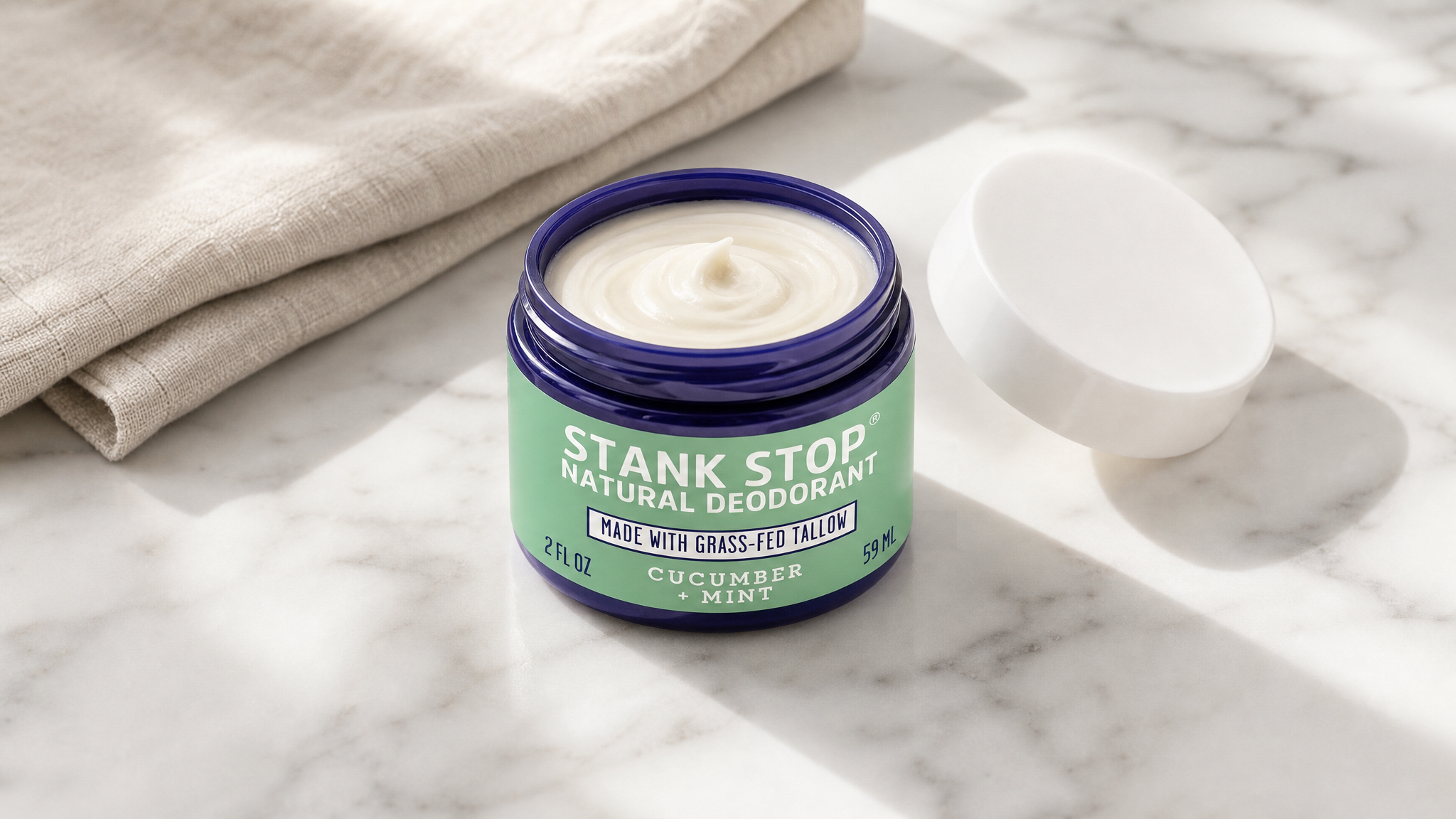
If you're new to tallow deodorant, start with the 1 oz cream. It's the lowest-commitment format — enough product for 1–2 months of daily use — and fingertip application gives you precise control over how much you're using. A pea-sized amount per underarm is sufficient. Warm it briefly between your fingertips and smooth it in; it absorbs within a couple of minutes.
For sensitive skin or fragrance sensitivity: start with the Unscented version — same formula, no essential oils. If you want a scent, you can add it once you know how your skin responds to the base.

Best Starting Point
Stank Stop Cream Deodorant, Unscented, 1 Oz
$12.00 — The lowest-commitment way to test the formula. No fragrance, no aluminum. Lasts 1–2 months.
Shop Now

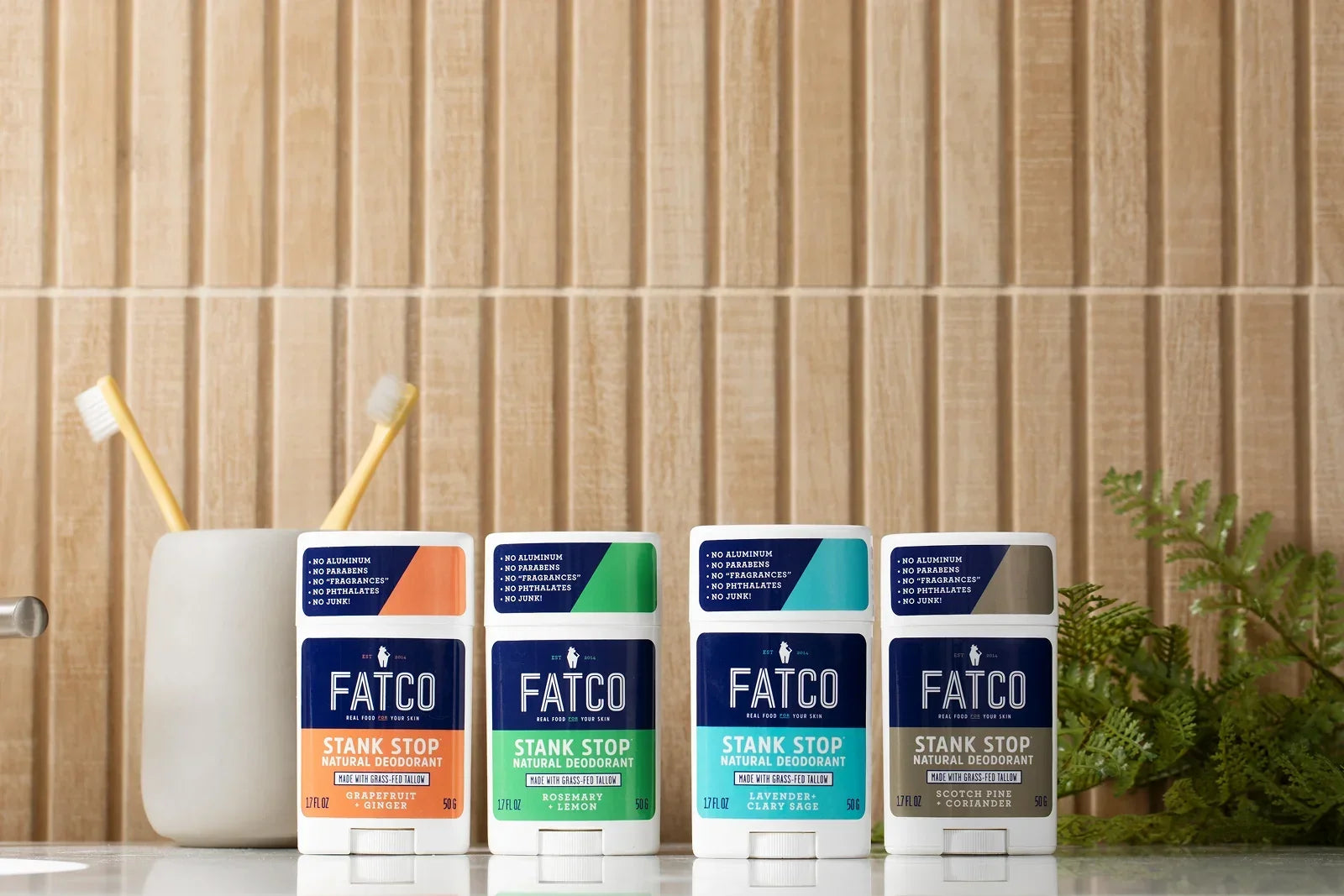
See the full Stank Stop lineup — all scents, both formats — at fatco.pro/collections/deodorant. And for a complete breakdown of formats, adjustment tips, and what to expect, visit our tallow deodorant guide.
Got Questions?
Frequently Asked Questions
Q Does tallow deodorant work?
Yes. The baking soda in Stank Stop raises underarm pH to inhibit odor-causing bacteria; non-nano zinc oxide adds a second antibacterial layer. The tallow base conditions the skin and contributes antimicrobial fatty acids. Most users find it works as well as conventional natural deodorants — and causes significantly less irritation over time.
Q Does tallow deodorant stop sweating?
No. It controls odor without blocking sweat glands. Unlike aluminum antiperspirants, it does not suppress sweating. It addresses the bacteria that cause odor from sweat — not the sweat itself. If clinical-strength sweat suppression is your primary need, that's a different product category.
Q Is there an adjustment period when switching to tallow deodorant?
If you're switching from aluminum antiperspirant, expect 1–4 weeks of adjustment. Sweat glands that have been partially blocked tend to overcompensate when unblocked, producing more sweat than normal until they recalibrate. The odor control still functions during this window — the sweat volume is what temporarily increases. This is normal and resolves on its own.
Q Why does tallow deodorant cause less irritation than other natural deodorants?
Two reasons. First, zinc oxide buffers the skin disruption that baking soda causes on its own — so the formula is gentler than baking-soda-only options. Second, tallow's fatty acid profile closely mirrors human sebum, so the skin absorbs and accepts it readily rather than reacting to it. Together, these make Stank Stop one of the gentler natural deodorant formulas available.
Q How long does a jar of Stank Stop last?
The 1 oz cream lasts approximately 1–2 months with one application per day (pea-sized amount per underarm). The 2 oz jar lasts approximately 3–4 months. The 1.7 oz stick provides similar duration to the 1 oz cream. Less is more with tallow-based formula — start with a small amount and adjust from there.